Tag

#Monica Bellucci Interviews

9 Content
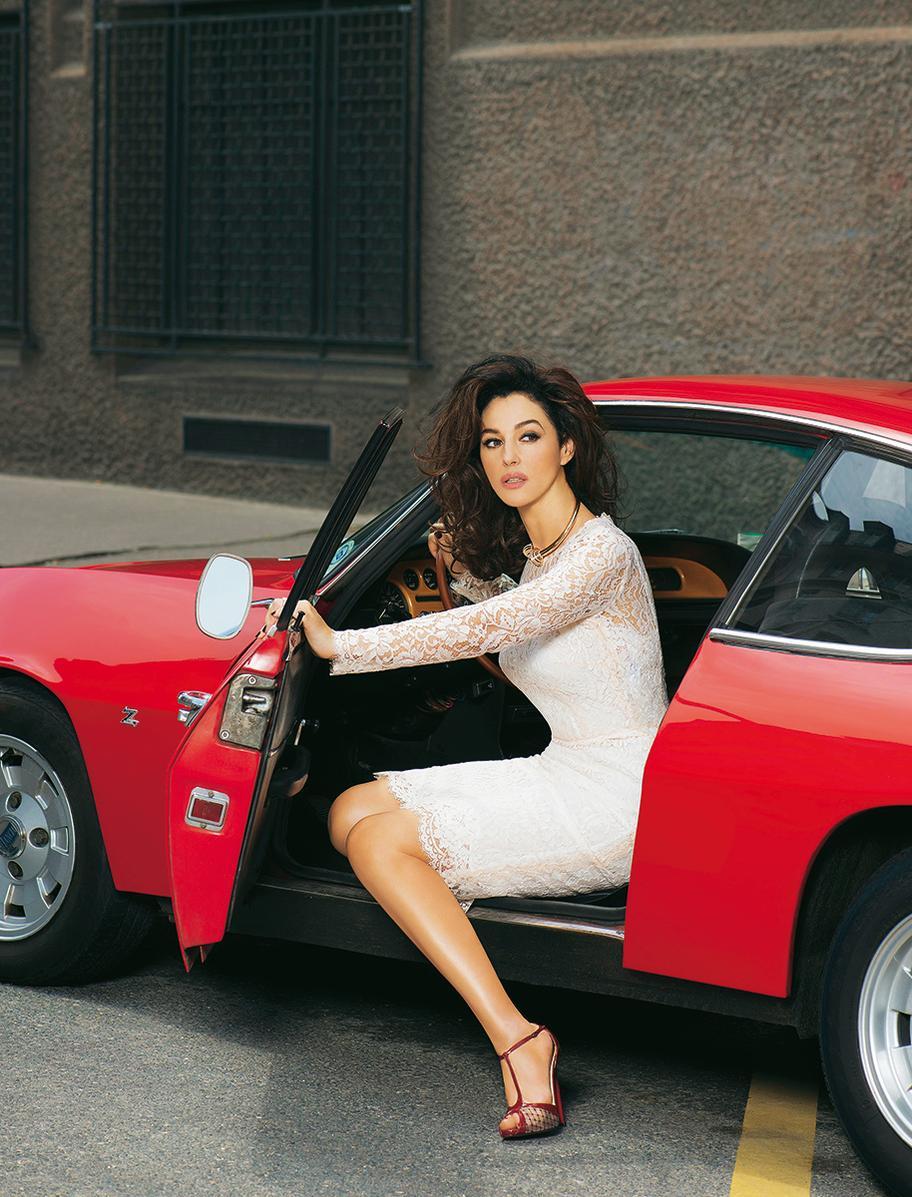
Monica Bellucci, Madame Figaro InterviewINTERVIEWS10 photos

Monica Bellucci, Madame Figaro Interview

For Monica Bellucci, “women should love their femininity”. Interview & photo shoots...
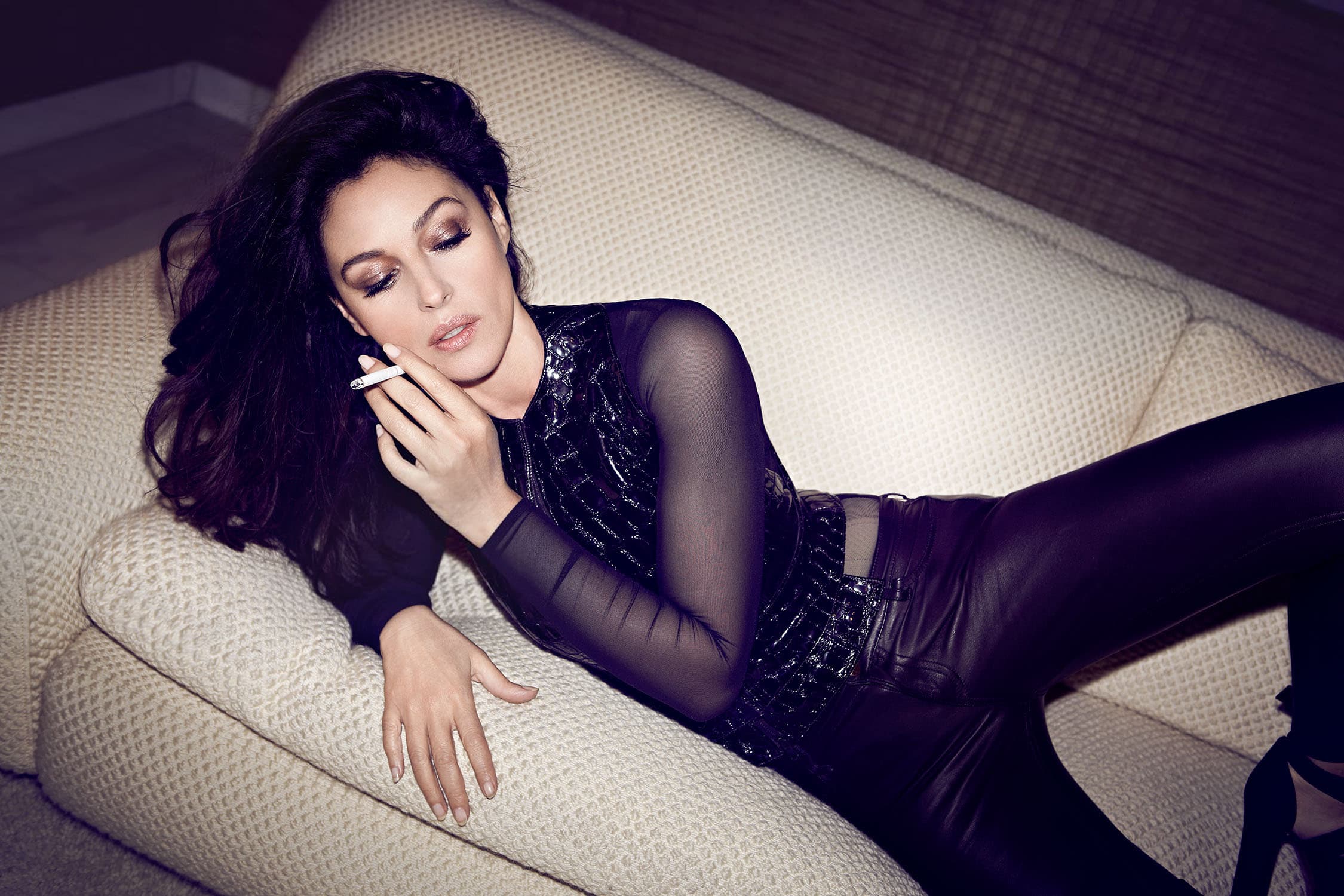
Monica Bellucci in BlackINTERVIEWS11 photos

Monica Bellucci in Black

Italian actress Monica Bellucci featured on the cover of the 7000 magazine.
What does Monica Bellucci like or hate?INTERVIEWS21 photos

What does Monica Bellucci like or hate?

Here you can find answers to questions that Monica Bellucci likes, doesn't like, loves and hates. This exclusive interview is for Monica Bellucci fans!
Monica Bellucci for ELLE FranceINTERVIEWS6 photos

Monica Bellucci for ELLE France

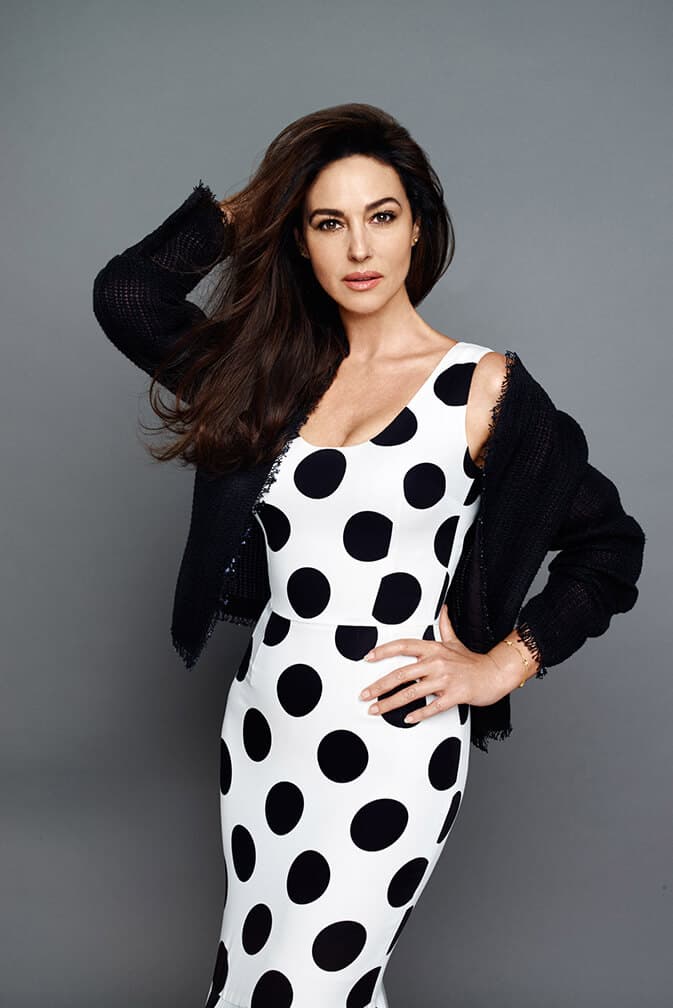
Monica Bellucci covers Elle France 2015 February issue by Derek Kettela. Interview: Monica Bellucci, the beauty

Monica Bellucci Exclusive InterviewINTERVIEWS3 photos

Monica Bellucci Exclusive Interview

Monica Bellucci in Paris to discover more about her life and work. Having begun her modelling career at 13, Bellucci’s first major film was the BAFTA-winning 1996 romantic thriller L’Appartement, which also starred Vincent Cassel – the man she went on to marry. Having split with him nearly five years ago, Bellucci has been balancing work on high-profile projects – she starred as the oldest ever “Bond girl” at the age of 51 in Sam Mendes’s Spectre – with raising her impressively multilingual daughters Deva (13) and Léonie (seven). Along the way, she’s been unafraid to tackle unusual and challenging projects, the most controversial being Gaspar Noé’s 2002 psychological drama Irréversible, in which her character is raped in a notoriously protracted scene. Fluent in at least three languages, Bellucci learnt Serbian for Emir Kusturica’s 2016 drama On the Milky Road, which was four years in the making. High-profile American films include the Matrix sequels, Shoot ’Em Up and Mel Gibson’s The Passion of the Christ; Bellucci is also increasingly active in TV projects such as the 2017 series of Twin Peaks and the latest series of French sitcom Dix pour Cent, in which she plays herself. She’ll next be seen in Israeli director Eran Riklis’s upcoming spy thriller Spider in the Web, in which Sir Ben Kingsley will be co-starring. What’s it like working with Emir Kusturica? How is he different from other directors? He’s interesting because he does so many things … he’s a director, a writer, an actor, a musician. In his way of working, he’s a bit like Fellini. It’s another way of making movies – everything is about the light. The sun has to be right … everything can change, so the script is more like a base. But it was very interesting to be in this movie because it was a special atmosphere; this land I was in was beautiful but also very sad. I think Kusturica makes movies where there is duality between fantasy and pain, fantasy and reality. This is one of the most interesting parts of his world, and that’s why I approached this project from its human and artistic point of view, never a political one. The film is interesting because it’s a love story between two adults, and it proves that love and sexuality are a matter of energy and not age: we see two people that aren’t young any more but the moment they meet, something beautiful and magical happens. I got acquainted with [Kusturica’s] work through Time of the Gypsies. I saw it a long, long time ago – it was a really amazing work. In every movie he does, even when the stories are different, he comes back to his subject of fantasy and reality: it’s as if he’s in some way trying to escape the pain of his country through the dream. In his films there is violence, but at the same time there are moments of ecstasy. What were the positives and negatives of acting on such a small-scale, parochial film? No negativity at all. And I’m happy there are good Italian directors like Alice Rohrwacher, [Matteo] Garrone, [Paolo] Sorrentino, [Luca] Guadagnino – it’s amazing to see the possibility to come out of [Italy] and make an international career. Because we were very stuck with Fellini, Rossellini, Visconti, De Sica, which was great, but it’s beautiful to see this new generation of young, talented directors coming out. The talent of directors and actors is there, it’s just that sometimes there are political and economic problems. I like Alice very much – she’s very natural, very direct, very human and very private. I like that very much. You’ve just starred in the French TV series Dix pour cent, and you played an opera singer in the US TV series Mozart in the Jungle. How do French and Italian TV compare to US TV, other than presumably having less money? In Italy, there have been very good TV series, like Gomorra. Even in France, they do very good TV series. Dix pour cent is on Netflix and is very successful. Netflix gives a chance – even French and Italian series can go all over, and it’s a new way to communicate. [Jean-Luc] Godard used to say that when you look at TV you look down, and when you look at cinema you look up. But I think today everything is changing, and when you can see what we can do in TV series, what kind of roles actresses can have – like in Big Little Lies – it’s amazing to see all these actresses have amazing roles like that, and explore so many [facets of] the human condition. So many people don’t go to the cinema. Cinema is in the home now, and that’s a great way to communicate with people who don’t often go to the cinema. But cinema too is communication. TV, cinema – if it’s good quality, why not [both]? Have you any ambition to do theatre work? No, actually … But I’m sure one day I’m going to find something that gives me the feeling that I want to repeat it every night. It’s a special thing, theatre – [stage] actors tell me that all the time. When you’re onstage, every night is different because every night you have the new possibility to express the pièce. I’m sure that one day I am going to have this experience. But for now, yes, just movies. What is beautiful about acting is that for some actors it never ends. You can have [acting] experiences even when you’re 70. Even in France, actresses are “Mademoiselle” all their life – never “Madame”, always “Mademoiselle”. It’s a never-ending story in some way. You’ve said before that you “come from the world of fashion”. Fashion, like acting, demands a degree of physical mastery – but does it have any emotional dimensions? Fashion gave me the possibility to get in touch with myself. Because actually, as I say all the time, the body is so important to express yourself. When you’re an actor, it’s like being a dancer in some way – everything gets through the body … you are your own instrument. So the fashion world was interesting for me to get in touch with these feelings, and also, for me, it was a question of passion. When I was young, I was in love with pictures and I used to think that a beautiful picture can give you great emotions, like when you watch a great movie or read a great book. Through that I learnt that to be an actor is such special work, but also very fragile. You are your own instrument, so everything can be very delicate: fragile but beautiful. Sometimes when you see incredible dancing – for example, I went to the Bolshoi and it was one of the most beautiful things I’ve seen in my life – you see how our bodies can make magical things. This is what happens to an actor, when they give their body for the role. The body becomes an object of work. But you have to respect your body. Even when you give your soul for a role, you have to always respect your soul. For me, it makes the work more interesting. [Physicality gives me] the possibility to get in touch with different people, different cultures. Like I said before, it is about communication, [whether I] work with Alice Rohrwacher or Sam Mendes or make an American TV series or a French TV series. You’ve worked in film industries around the world. Obviously, the Harvey Weinstein scandal was huge last year; where is that kind of predatory sexual behaviour worst? Is Hollywood particularly bad? I come from fashion, where of course young girls can get into those kinds of situation. So when I got into cinema I was already old enough to see how to deal with those situations. It’s true that when you’re young, you [are] in touch with people who are powerful and can use their power to make you feel humiliated. This can happen. But I don’t know if that’s sexuality or just [pure] humiliation. Sometimes people are like two personalities – one is very intelligent and talented, [and the other is] completely sick. It can be in any industry, any situation. It’s very difficult. It’s beautiful that women today can talk about it. They’re less scared. Sometimes women are like birds – they get stuck in a cage and don’t go out, because they’re scared. To come out of this kind of feeling takes time. Is it the same all over the world? Yes, of course. In every situation – it can be cinema, it can be fashion, it can be in an everyday office. It’s what happens when you give power to people, and it’s about personalities. You can use your power in a good way or a bad way. It’s just about dealing with power. Those people use their power to cover their own sickness. What’s the most difficult film you’ve ever been involved in? Irréversible … it was difficult but very enriching. And to work with Gaspar Noé was so interesting because he’s such a talented director. It caused quite a scandal when it was released in 2002. Yes, a scandal, but today it’s a cult movie. They study this movie in schools of cinema. The way it was made is so special. Did it change the kind of role that you were being offered? It’s more what kind of roles I [started] looking for. As an actor, the opportunities [are beyond your control], but at the same time your freedom lies in your choice. If you [choose a certain role] it’s because maybe you’re looking for something or there is a part of you – a darkness, maybe – that needs to come out. Do you have a favourite of your own films? I don’t know; it’s so difficult to say. Maybe L’Appartement, [which] gave me so much. It was my first French movie, it won a BAFTA, and through that film I had the chance to make my first American film, with Morgan Freeman and Gene Hackman, called Under Suspicion. And through [Under Suspicion] I could go to Cannes for the first time. It’s incredible how life is strange, and how a mix of coincidences brings you someplace that isn’t [down to] you. Which director would you most like to work with? Too many. [Laughs] When I say that, I realise how happy I am – I still have a lot of passion for my work, and I still have so much to learn. This makes me feel excited and happy – I feel I want to be in this business. And I’m so happy I can lead my life through my work. You’ve defended airbrushing or “retouching” in the past. Don’t you think it contributes to unrealistic images of women? Of course, when there’s too much it’s not beautiful any more. But things are changing right now … they all understand when retouching is too much. It’s like sometimes when you see publicity from 15 years ago, you see how now it’s completely different. The picture looks so old when it’s too retouched. Everybody understands that too much retouching takes the life out of the picture. You can’t recognise the faces any more. You’ve said in the past, “Pour moi, tout est politique.” What do you mean by this? It’s about choices. When you choose to have children, it’s because you’re positive about life. You believe that things can change, that even though things are terrible sometimes you have faith in humanity. It’s a beautiful choice that you make as a woman. Well – beautiful or not, it’s a choice of faith. What do you make of Emmanuel Macron? People like him very much. I don’t vote in France, but I like him. I think he’s bringing something new, a new energy, and so young. Do you vote in Italy? I vote in Italy … I have different bases – Rome, France, Portugal – but this is the way I’ve always lived. It’s even the way I’ve approached my work – different countries, different directors … if I wanted to make an international career, that’s the only way I [could]. But it’s so interesting for me. When I’m with Emir Kusturica, I speak Serbian, when I’m with Bahman Ghobadi I speak Farsi – but of course I don’t speak those languages in real life. It’s just for the movies. But [languages are] so interesting. What do you make of Italian politics right now? Those in power are somewhat older than Macron – Prime Minister Paolo Gentiloni, President Sergio Mattarella. Where do you feel you stand politically? Things right now in Italy are going better. Economically the situation is better right now. We call Italy “il bel paese”, and maybe there is a reason for that. And I have to say, when I go around the world, I smile when I say I’m Italian … even though there are so many problems in our country, the attitude of Italian people is beautiful. The theme of this issue of Glass is Timeless. What’s the most timeless film you’ve starred in? [Thinks for a while] Hmm … Malèna, by Giuseppe Tornatore. It’s about a woman during the Second World War. What was it, 2000? 18 years old already. It doesn’t get old. The film is still very beautiful. In your opinion, what makes something timeless? It’s difficult to say. Maybe a subject that is the basis of humanity … something that is not about fashion, or the [zeitgeist]. When you see something that is timeless, it touches the soul. Consider the Pyramids. They’re timeless, like a film, a book or a painting. They touch your soul.

Monica Bellucci finding herself in her 50sINTERVIEWS5 photos

Monica Bellucci finding herself in her 50s

Most actors nowadays only give interviews if they have a new project to sell. But Monica Bellucci is not your average actor. Like Sophia Loren, Gina Lollobrigida, Silvana Mangano, she has Italian film-star glamour – dark hair, voluptuous, a sensuous beauty. Unlike the post-war icons, however, Bellucci has been in regular work beyond her 40s. At 51 she made headlines as the ‘oldest Bond girl ever’ for her role as Lucia Sciarra, widow of a notorious assassin, in Spectre. Bond meets Lucia at her husband’s funeral, where she is dressed in 5in heels and a black veil. Their romance is brief but, after all of 007’s trademark conquests of young things in bachelor pads, when the film came out in 2015 it was cause for celebration (except in India, where a kiss between Daniel Craig and Bellucci was deemed too long by the Central Board of Film Certification and duly shortened by half). We meet in her extremely large and beautiful house in Paris’s 14th arrondissement, where she lives with her two daughters, Deva, 13, and Léonie, seven. A housekeeper invites me into a magnificent sitting room with a high ceiling, large windows and a sumptuous sofa. I hear the sound of other staff in the kitchen. ‘Of course I have people to help me,’ Bellucci says, after she whirls in, chatting 19 to the dozen. She reminds me that she is now a single mother, since the break-up of her 14-year marriage to Vincent Cassel in 2013. She says she’s had to become ‘more structured, more grounded’ since their divorce. ‘I was just emotion before. This is a new part of me I am discovering now in my 50s.’ At 52, Bellucci has a compelling voice, is even more beautiful in the flesh than on film, and appears, rather stylishly, to be wearing an off-the-shoulder evening top at 10.30 in the morning. The fake eyelashes, it transpires, are not for my benefit. She was shooting a film yesterday to promote a song she’s made with a leading French singer. She explains she gets approached for work all the time, especially by photographers, and normally says no. But when Francesco Carrozzini called her for this Telegraph shoot it was different. ‘I knew his mother,’ Bellucci says, referring to the Italian Vogue editor Franca Sozzani, who died last year. They met in Bellucci’s previous life as a model. ‘She was one of the greatest women I ever met,’ Bellucci continues. ‘Such a strong woman. I had so much respect for her, the way she managed her professional life, her personal life. So when he called me, I said yes. It was a way to be in touch with her. That day we did the shoot in Chinatown in New York, I thought about her a lot.’ Success as a model came before success as an actress, and Bellucci still feels very much at home being photographed. The struggle, she admits, was being taken seriously in films at the start of her career, when in 1990 she was cast in the Italian-language film Vita coi figli (Life with the Kids) by the Italian director Dino Risi after he saw her picture in a magazine. ‘The most difficult period was when I transferred from modelling to acting,’ she has said. Perhaps this is why she has pursued ‘difficult’ roles such as that of a rape victim in the controversial thriller Irreversible, Mary Magdalene in Mel Gibson’s The Passion of the Christ, and the Mirror Queen in Terry Gilliam’s The Brothers Grimm. ‘When you are beautiful and you do something that is very strong, people say you are courageous, but they don’t say you are good,’ she says. ‘Now I am older, they say, “You are good.”’ Bellucci is upbeat about ageing. But then she hasn’t really aged. She hasn’t lost her looks (she credits acupuncture and facial massages) or her figure – ‘I do Pilates and swim, but I don’t wake up at six and go to the gym. Forget it!’ – and has a ready list of inspirational maxims: ‘It is not a matter of age, it is a matter of energy,’ ‘The body gets older but the soul younger,’ ‘You can be old at just 20,’ and so forth. ‘Sophia Loren, Lollobrigida, Silvana Mangano, could exist as icons after 40 but not as actresses. And I think today it is completely different.’ Look at Charlotte Rampling, Judi Dench, Helen Mirren, she says. ‘Women look at themselves in a different way today and because of that we are watched in a different way.’ She’s certainly been busy post-Spectre. She’s appeared in On the Milky Road, a magic-realism film set in the 1990s during the Bosnian War; and the Amazon comedy series Mozart in the Jungle, alongside Gael García Bernal; as well as the Twin Peaks revival (‘It was amazing to work with David Lynch’). ‘These are not stories I could do before,’ she says, delighted with the way life is turning out. ‘I had no idea when I was 25 that at 50 I would still be working. It is a great discovery for me.’ Bellucci grew up in a comfortable family, in the small Città di Castello, on the Umbrian border with Tuscany. Her father, Pasquale, ran a haulage company and her mother, Brunella, was a housewife and amateur painter. Bellucci was an only child – her parents didn’t want another one. ‘They had me when they were very young and although my mother was maternal, maybe she was too young,’ she says. ‘But she did what she could and she did well. ‘I think I missed having a brother or a sister,’ Bellucci continues. ‘That’s why I have two kids, because even though sometimes you can fight, it is better to fight than be lonely.’ She says she had lots of cousins, but remembers at eight or nine feeling very alone. Her personality – ‘So curious, so open, I want to know things’ – meant that in her early teens she longed for the big outside world. ‘A small town is something that can protect you but at the same time, it made me want to escape and look for other things.’ What happened, of course, was modelling. ‘I did my first pictures when I was 13. A friend of the family was a photographer and he said, “Can I have a picture of Monica?” And then when I was 16, another friend of my father, who was into fashion, came and said, “I would like to do fashion shoots with Monica.” So I did a fashion show in Florence and then in Milan, and actually while I was at school, I was doing fashion shows three times a year. And then I became professional when I finished high school at 18.’ Photographs of Bellucci as a teenager (‘I looked like a woman at 13’) show her with red lips, curled hair and a waistcoat that flops sideways to give a glimpse of her breast. What did your parents think about modelling? ‘Maybe because they were young they accepted it and understood.’ She says her mother, in particular, wanted something more for her daughter. ‘She wanted to push me away. Inside her was, “Oh my God, no, not the same life as me.”’ And so in her early 20s Bellucci lived in Paris, Milan and New York, where she worked in fashion after being signed by Elite Model Management, and partied with her new-found friends. ‘It was like my parents let me be free in a way that was almost incredible, almost maybe too much, but it was great.’ At 25, she married Claudio Carlos Basso, a photographer. The marriage lasted 18 months. ‘I haven’t seen him since.’ ‘Modelling came to me naturally, and I loved pictures. I loved the world of image. I didn’t do something I was forced into. When I was young, I had books by Helmut Newton, Bruce Weber; pictures were talking to me from an early age.’ In 1992, two years after Dino Risi was so entranced by an image of Bellucci that he cast her in his Italian TV film, Roman Coppola spotted her fiery sexuality in the Italian magazine Zoom and begged his father, the director Francis Ford Coppola, to offer her a part in his film Bram Stoker’s Dracula. She played one of Dracula’s brides. ‘It was just a moment, but I had to go to LA,’ she says. ‘I think my dream always was to be an actress, but I was coming from a place where cinema was so far away from me.’ Roman Coppola would not actually meet Bellucci in the flesh until some 25 years later, at the Golden Globe Awards, where Mozart in the Jungle, which he co-created, won an award. ‘He said, “Hey! You have to give me something because I am the one who discovered you.”’ But at 28 she was still just a wannabe, like thousands of models. She took acting classes to iron out her modelling ‘tics’ – ‘the way you walk, the way you talk, you lose that kind of natural way you need for cinema. There is an attitude in modelling.’ Her breakthrough came in 1996 with The Apartment, a moody French film noir about a romantic young executive who leaves his corporate life behind to search for his first love, played by Bellucci. It gave her the recognition she longed for. She was nominated for a César Award for Most Promising Actress, and met her husband-to-be, Cassel, the charismatic French actor best known for his roles in Ocean’s Twelve and Black Swan. Known as Les Glamours, the couple went on to make eight more films together. Women look at themselves in a different way today and because of that we are watched in a different way Although they are now divorced and living on different continents – he is in Brazil – she says their relationship is amiable. ‘When you have kids it’s important to have a relationship if it’s possible.’ She says Cassel is a good father but works and travels a lot, so the girls live with her. Life nowadays is bound up with her children. ‘The fact I had my kids late’ – in her 40s – ‘gives me the freedom to make one film a year and then I can spend the rest of my time with them,’ Bellucci says. She prepares their breakfast, walks her younger daughter to school; they mostly eat dinner as a family. ‘If I need to go out, I go out, but kids like it when their mother is there.’ She has houses in Rome and Lisbon, a relationship (she smiles, shakes her head and refuses to elaborate) and a new independence. ‘I am completely in charge of my life, 100 per cent.’ Source: The Telegraph

At Home With Monica BellucciINTERVIEWS2 photos

At Home With Monica Bellucci

Dressed in a curve-hugging black knit dress by Alexander McQueen, the actress, with her classical beauty, oozes dolce vita glamour, but is quick to brush off such allusions, saying she likes to keep her style effortless. “Maybe unconscio...

Love and sexualityINTERVIEWS2 photos

Love and sexuality

Monica Bellucci talks about On the Milky Road, trusting directors, playing a Bond girl and why love and sexuality are a matter of energy, not age.
Chairwoman Of The Board, 2014INTERVIEWS1 photos

Chairwoman Of The Board, 2014

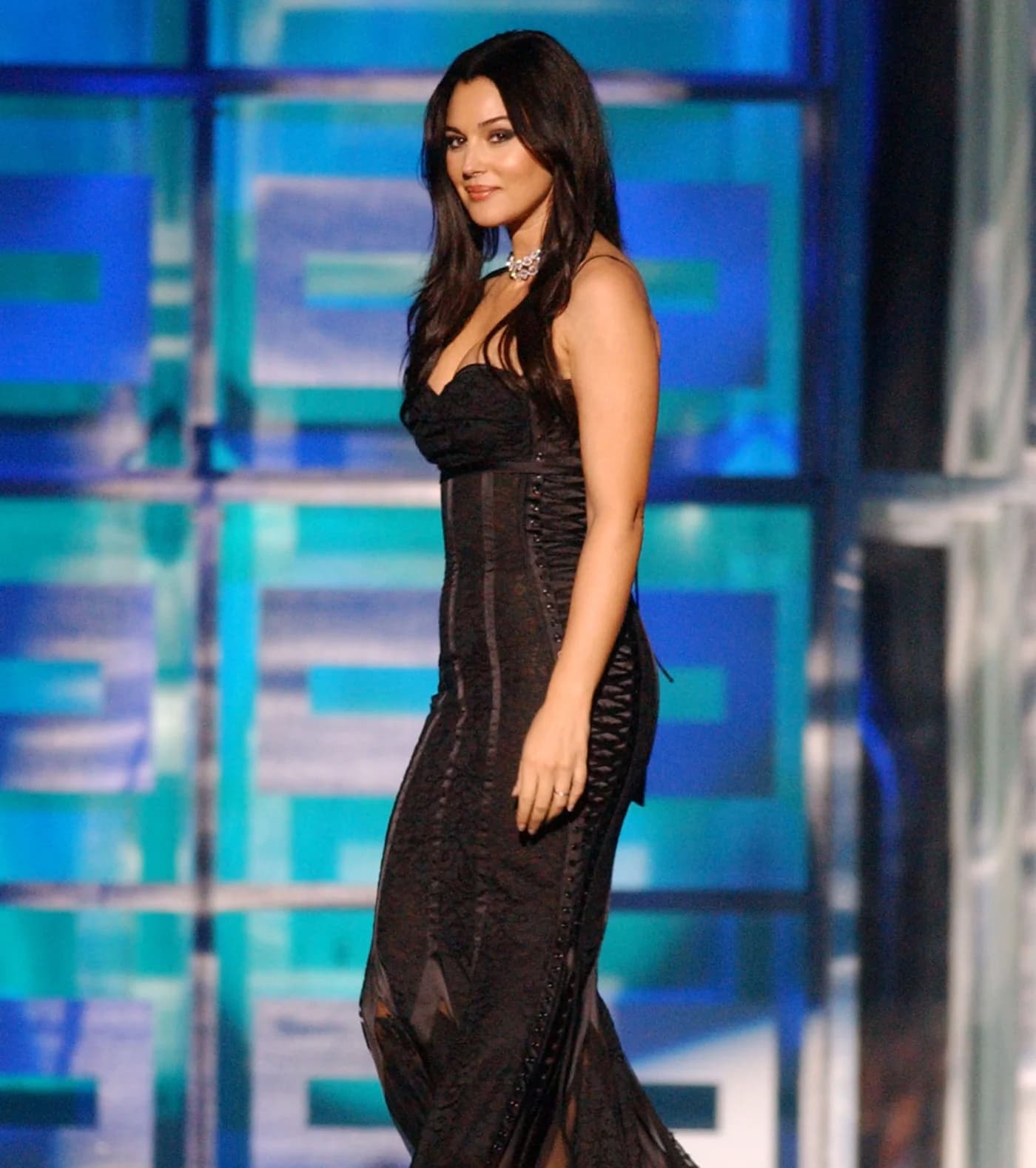
A 2014 interview with Monica Bellucci on beauty, Italian identity, Dolce & Gabbana, cinema and the long arc of her career.