Tag
#Monica Bellucci interview
5 Content
GALLERYNew9 photosMonica Bellucci's Sensual Light Burns Brightly
Monica Bellucci appears on TELVA Magazine’s January 2025 cover in a Cartier-focused editorial photographed by Jesús Isnard and styled by Alicia Chapac, reflecting on Maria Callas, maturity and the quiet strength behind an icon.
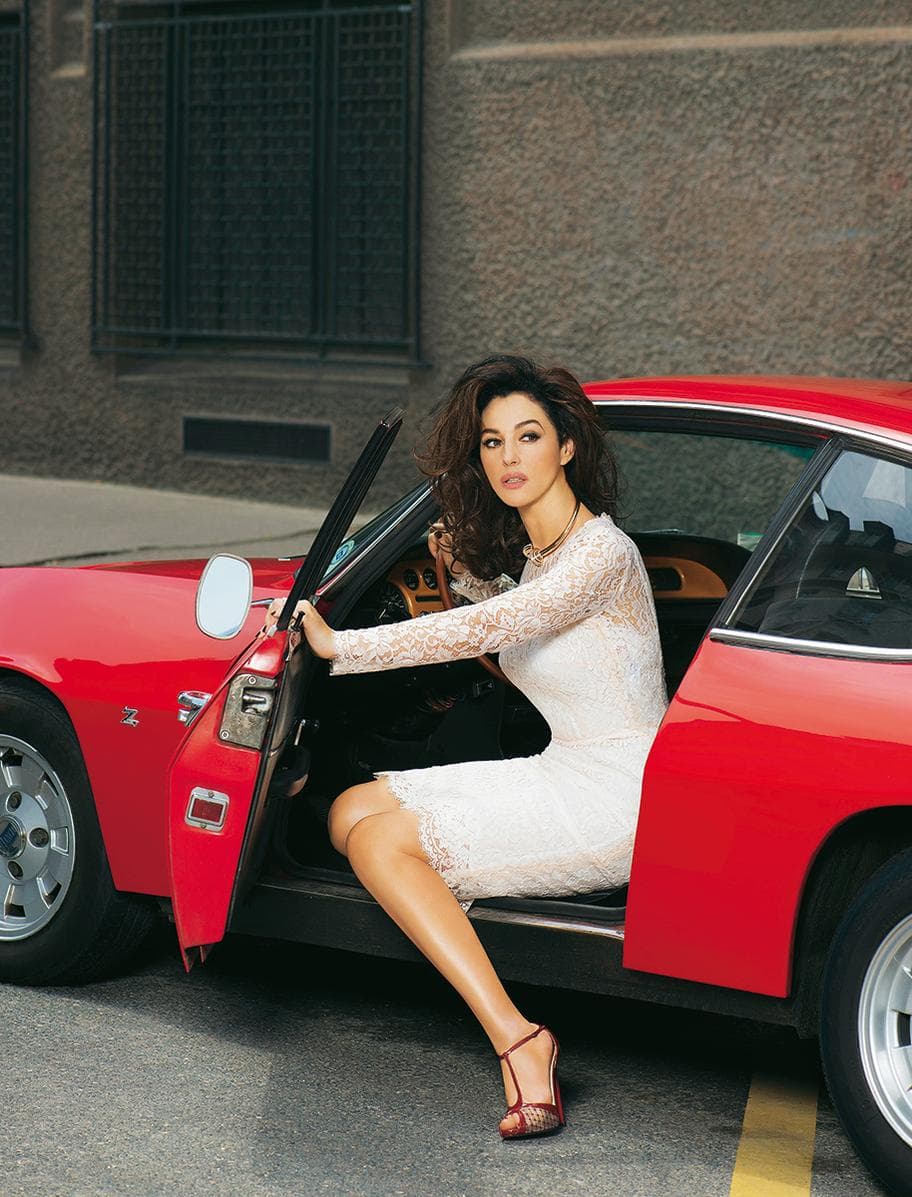
INTERVIEWS10 photosMonica Bellucci, Madame Figaro Interview
For Monica Bellucci, “women should love their femininity”. Interview & photo shoots...
GALLERY28 photosMonica Bellucci Exclusive Secrets
Discover the secrets of Monica Bellucci who once confessed she has become more beautiful with age. The Italian star, who began her career as a 13-year-old model, has remained an evergreen presence on the international cinematic landscape. From starring in independent dramas to huge blockbusters, Bellucci is at ease playing a variety of characters. She has been a regular fixture on the covers of fashion magazines and at international film festivals. While pregnant with both her children, she posed semi-nude on the cover of Vanity Fair and has appeared on several ‘sexiest of the year’ lists. UNIQ presents exclusive interview with Monica Bellucci. Discover the secrets of world’s most beautiful woman…
INTERVIEWS3 photosMonica Bellucci Exclusive Interview
Monica Bellucci in Paris to discover more about her life and work. Having begun her modelling career at 13, Bellucci’s first major film was the BAFTA-winning 1996 romantic thriller L’Appartement, which also starred Vincent Cassel – the man she went on to marry. Having split with him nearly five years ago, Bellucci has been balancing work on high-profile projects – she starred as the oldest ever “Bond girl” at the age of 51 in Sam Mendes’s Spectre – with raising her impressively multilingual daughters Deva (13) and Léonie (seven). Along the way, she’s been unafraid to tackle unusual and challenging projects, the most controversial being Gaspar Noé’s 2002 psychological drama Irréversible, in which her character is raped in a notoriously protracted scene. Fluent in at least three languages, Bellucci learnt Serbian for Emir Kusturica’s 2016 drama On the Milky Road, which was four years in the making. High-profile American films include the Matrix sequels, Shoot ’Em Up and Mel Gibson’s The Passion of the Christ; Bellucci is also increasingly active in TV projects such as the 2017 series of Twin Peaks and the latest series of French sitcom Dix pour Cent, in which she plays herself. She’ll next be seen in Israeli director Eran Riklis’s upcoming spy thriller Spider in the Web, in which Sir Ben Kingsley will be co-starring. What’s it like working with Emir Kusturica? How is he different from other directors? He’s interesting because he does so many things … he’s a director, a writer, an actor, a musician. In his way of working, he’s a bit like Fellini. It’s another way of making movies – everything is about the light. The sun has to be right … everything can change, so the script is more like a base. But it was very interesting to be in this movie because it was a special atmosphere; this land I was in was beautiful but also very sad. I think Kusturica makes movies where there is duality between fantasy and pain, fantasy and reality. This is one of the most interesting parts of his world, and that’s why I approached this project from its human and artistic point of view, never a political one. The film is interesting because it’s a love story between two adults, and it proves that love and sexuality are a matter of energy and not age: we see two people that aren’t young any more but the moment they meet, something beautiful and magical happens. I got acquainted with [Kusturica’s] work through Time of the Gypsies. I saw it a long, long time ago – it was a really amazing work. In every movie he does, even when the stories are different, he comes back to his subject of fantasy and reality: it’s as if he’s in some way trying to escape the pain of his country through the dream. In his films there is violence, but at the same time there are moments of ecstasy. What were the positives and negatives of acting on such a small-scale, parochial film? No negativity at all. And I’m happy there are good Italian directors like Alice Rohrwacher, [Matteo] Garrone, [Paolo] Sorrentino, [Luca] Guadagnino – it’s amazing to see the possibility to come out of [Italy] and make an international career. Because we were very stuck with Fellini, Rossellini, Visconti, De Sica, which was great, but it’s beautiful to see this new generation of young, talented directors coming out. The talent of directors and actors is there, it’s just that sometimes there are political and economic problems. I like Alice very much – she’s very natural, very direct, very human and very private. I like that very much. You’ve just starred in the French TV series Dix pour cent, and you played an opera singer in the US TV series Mozart in the Jungle. How do French and Italian TV compare to US TV, other than presumably having less money? In Italy, there have been very good TV series, like Gomorra. Even in France, they do very good TV series. Dix pour cent is on Netflix and is very successful. Netflix gives a chance – even French and Italian series can go all over, and it’s a new way to communicate. [Jean-Luc] Godard used to say that when you look at TV you look down, and when you look at cinema you look up. But I think today everything is changing, and when you can see what we can do in TV series, what kind of roles actresses can have – like in Big Little Lies – it’s amazing to see all these actresses have amazing roles like that, and explore so many [facets of] the human condition. So many people don’t go to the cinema. Cinema is in the home now, and that’s a great way to communicate with people who don’t often go to the cinema. But cinema too is communication. TV, cinema – if it’s good quality, why not [both]? Have you any ambition to do theatre work? No, actually … But I’m sure one day I’m going to find something that gives me the feeling that I want to repeat it every night. It’s a special thing, theatre – [stage] actors tell me that all the time. When you’re onstage, every night is different because every night you have the new possibility to express the pièce. I’m sure that one day I am going to have this experience. But for now, yes, just movies. What is beautiful about acting is that for some actors it never ends. You can have [acting] experiences even when you’re 70. Even in France, actresses are “Mademoiselle” all their life – never “Madame”, always “Mademoiselle”. It’s a never-ending story in some way. You’ve said before that you “come from the world of fashion”. Fashion, like acting, demands a degree of physical mastery – but does it have any emotional dimensions? Fashion gave me the possibility to get in touch with myself. Because actually, as I say all the time, the body is so important to express yourself. When you’re an actor, it’s like being a dancer in some way – everything gets through the body … you are your own instrument. So the fashion world was interesting for me to get in touch with these feelings, and also, for me, it was a question of passion. When I was young, I was in love with pictures and I used to think that a beautiful picture can give you great emotions, like when you watch a great movie or read a great book. Through that I learnt that to be an actor is such special work, but also very fragile. You are your own instrument, so everything can be very delicate: fragile but beautiful. Sometimes when you see incredible dancing – for example, I went to the Bolshoi and it was one of the most beautiful things I’ve seen in my life – you see how our bodies can make magical things. This is what happens to an actor, when they give their body for the role. The body becomes an object of work. But you have to respect your body. Even when you give your soul for a role, you have to always respect your soul. For me, it makes the work more interesting. [Physicality gives me] the possibility to get in touch with different people, different cultures. Like I said before, it is about communication, [whether I] work with Alice Rohrwacher or Sam Mendes or make an American TV series or a French TV series. You’ve worked in film industries around the world. Obviously, the Harvey Weinstein scandal was huge last year; where is that kind of predatory sexual behaviour worst? Is Hollywood particularly bad? I come from fashion, where of course young girls can get into those kinds of situation. So when I got into cinema I was already old enough to see how to deal with those situations. It’s true that when you’re young, you [are] in touch with people who are powerful and can use their power to make you feel humiliated. This can happen. But I don’t know if that’s sexuality or just [pure] humiliation. Sometimes people are like two personalities – one is very intelligent and talented, [and the other is] completely sick. It can be in any industry, any situation. It’s very difficult. It’s beautiful that women today can talk about it. They’re less scared. Sometimes women are like birds – they get stuck in a cage and don’t go out, because they’re scared. To come out of this kind of feeling takes time. Is it the same all over the world? Yes, of course. In every situation – it can be cinema, it can be fashion, it can be in an everyday office. It’s what happens when you give power to people, and it’s about personalities. You can use your power in a good way or a bad way. It’s just about dealing with power. Those people use their power to cover their own sickness. What’s the most difficult film you’ve ever been involved in? Irréversible … it was difficult but very enriching. And to work with Gaspar Noé was so interesting because he’s such a talented director. It caused quite a scandal when it was released in 2002. Yes, a scandal, but today it’s a cult movie. They study this movie in schools of cinema. The way it was made is so special. Did it change the kind of role that you were being offered? It’s more what kind of roles I [started] looking for. As an actor, the opportunities [are beyond your control], but at the same time your freedom lies in your choice. If you [choose a certain role] it’s because maybe you’re looking for something or there is a part of you – a darkness, maybe – that needs to come out. Do you have a favourite of your own films? I don’t know; it’s so difficult to say. Maybe L’Appartement, [which] gave me so much. It was my first French movie, it won a BAFTA, and through that film I had the chance to make my first American film, with Morgan Freeman and Gene Hackman, called Under Suspicion. And through [Under Suspicion] I could go to Cannes for the first time. It’s incredible how life is strange, and how a mix of coincidences brings you someplace that isn’t [down to] you. Which director would you most like to work with? Too many. [Laughs] When I say that, I realise how happy I am – I still have a lot of passion for my work, and I still have so much to learn. This makes me feel excited and happy – I feel I want to be in this business. And I’m so happy I can lead my life through my work. You’ve defended airbrushing or “retouching” in the past. Don’t you think it contributes to unrealistic images of women? Of course, when there’s too much it’s not beautiful any more. But things are changing right now … they all understand when retouching is too much. It’s like sometimes when you see publicity from 15 years ago, you see how now it’s completely different. The picture looks so old when it’s too retouched. Everybody understands that too much retouching takes the life out of the picture. You can’t recognise the faces any more. You’ve said in the past, “Pour moi, tout est politique.” What do you mean by this? It’s about choices. When you choose to have children, it’s because you’re positive about life. You believe that things can change, that even though things are terrible sometimes you have faith in humanity. It’s a beautiful choice that you make as a woman. Well – beautiful or not, it’s a choice of faith. What do you make of Emmanuel Macron? People like him very much. I don’t vote in France, but I like him. I think he’s bringing something new, a new energy, and so young. Do you vote in Italy? I vote in Italy … I have different bases – Rome, France, Portugal – but this is the way I’ve always lived. It’s even the way I’ve approached my work – different countries, different directors … if I wanted to make an international career, that’s the only way I [could]. But it’s so interesting for me. When I’m with Emir Kusturica, I speak Serbian, when I’m with Bahman Ghobadi I speak Farsi – but of course I don’t speak those languages in real life. It’s just for the movies. But [languages are] so interesting. What do you make of Italian politics right now? Those in power are somewhat older than Macron – Prime Minister Paolo Gentiloni, President Sergio Mattarella. Where do you feel you stand politically? Things right now in Italy are going better. Economically the situation is better right now. We call Italy “il bel paese”, and maybe there is a reason for that. And I have to say, when I go around the world, I smile when I say I’m Italian … even though there are so many problems in our country, the attitude of Italian people is beautiful. The theme of this issue of Glass is Timeless. What’s the most timeless film you’ve starred in? [Thinks for a while] Hmm … Malèna, by Giuseppe Tornatore. It’s about a woman during the Second World War. What was it, 2000? 18 years old already. It doesn’t get old. The film is still very beautiful. In your opinion, what makes something timeless? It’s difficult to say. Maybe a subject that is the basis of humanity … something that is not about fashion, or the [zeitgeist]. When you see something that is timeless, it touches the soul. Consider the Pyramids. They’re timeless, like a film, a book or a painting. They touch your soul.
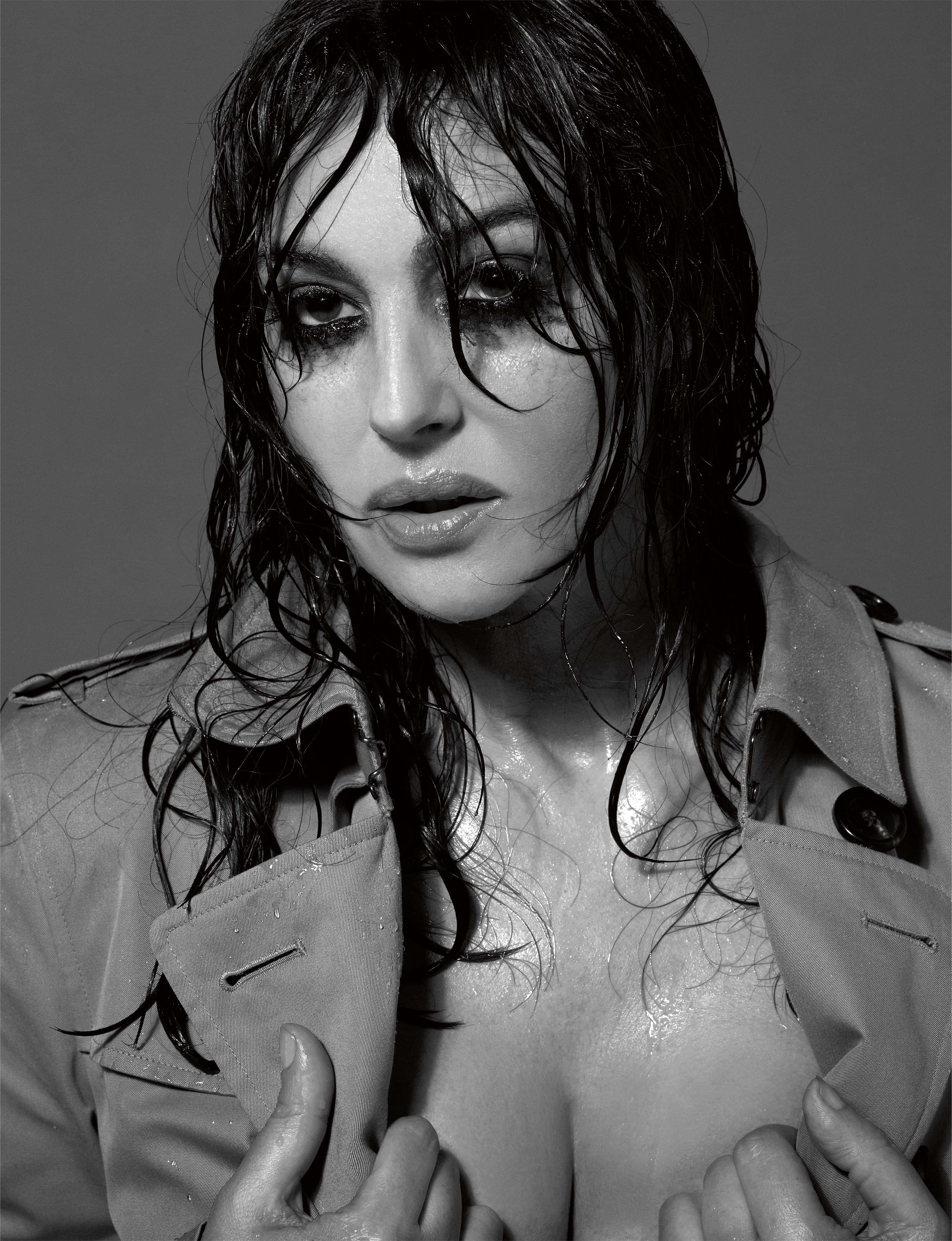
INTERVIEWS2 photosAll you need to know about Monica Bellucci movie “On The Milky Road”
How she transcended her beauty in order to affirm her talent as an actress with the greatest directors ? UniqBeauties.com: You are gorgeous, shockingly beautiful… but don’t you ever get bored of people telling you that every five minutes? MONICA BELLUCCI: You can never have enough compliments. In life we're subjected to so many insults and unkind attacks that a nice word, from time to time, can’t do any harm. What are the pros and cons of being so sublime? Oh la la! Sublime, really! The pros? Well in the words of Oscar Wilde, “Beauty lasts five minutes in life if you don’t have other qualities to maintain the interest.” And you know being pretty when you’re an actress is like a painful banality. Do you know many ugly actresses? If I was an astronaut it would be more original. With your daring choice of movies over the years have you made an active decision to escape the archetypal “woman-object”? No. Let’s just say there is always a slight complex with women who have an advantageous physique to prove themselves as credible actresses. For me it’s been doubly difficult because I started out as a model. A double death defying leap. It’s as if beauty creates a sort of mask that stops emotions from showing. This prejudice is still very widespread. Your question confirms it. As soon as a beautiful woman plays a prominent role, people will say “Ooh isn’t she daring,” but they don’t bother saying that she acts well. What role are you playing in the much anticipated Twin Peaks: The Return of David Lynch? I can’t tell you anything at all, you’ll have to wait watch the series yourself. What I do in the show, well it’s a true moment of cinematic love. It’s quite dreamy … Obviously. Voilà, and if I instantly accepted the role it was of course to be part of an experience led by David Lynch. My relationship with movies has always been like that: I can shoot with Rebecca Miller for five minutes, as much as I can film for four years with Emir Kusturica. I go from one extreme to the next. I just took part in a project by Niccolò Ammaniti, an Italian writer and it took a day of work. What he asked me to do was so out there I just couldn’t refuse. The most interesting projects are like mosaics where each piece is equally important. That’s how I perceive movie making. How come the filming of On the Milky Road by Emir Kusturica took four years? There are two reasons. On one hand we only shot during the summer, and on the other hand Emir very kindly let me do other parallel projects during the filming. I’ve always loved Kusturica’s films, I first discovered his work with The Time of Gypsies. When I saw that movie I said to myself this is an absolute masterpiece that will mark the history of cinema forever. I’ve always respected Kusturica’s work immensely, and when he called me about shooting with him, I was over the moon. He explained the thread of the film over the phone, but it was only when I was sent a script much later on, I realised I was going to be playing a Serbian woman. I was a bit worried about that at the beginning but I went for it head on and I think it’s been worth it. I didn’t understand everything in the film, but then I didn’t understand everything in Maxtrix Reloaded either. I’m probably just an idiot. No I don’t think so. On the Milky Road is a very particular film that plays out against the Balkan war, an era that means a lot to Kusturica. But there is also a very poetic side to this love that unites this mature couple, like we rarely see on the big screen. The two characters aren’t that young anymore, they’re expecting nothing from life, but in spite of that they rediscover love, sexuality and sensuality in the magical moments when they meet each other. How has the film industry changed over the years you’ve been working in it? Today it is all about TV series. That’s the big difference. Series have taken on an unbelievable importance. I’ve even done an American TV show, Mozart in the Jungle, which was a very lovely experience for me as an actress, I was really able to express myself. When I did the dubbing in French and in Italian, the director said to me, “What a shame this isn’t for the cinema!” But for me that’s not really a subject. When I see my daughter watching films on her mobile phone, I realise it really is another way of watching fiction. We’ve moved into another world. What did you think about all that business with Netflix at the Cannes Film Festival? What exactly was the problem? Netflix was accused of not making cinema in the true sense of the word. But Cannes is above all a festival about communication, and refusing to select a film simply because it isn’t diffused in actual movie theatres strikes me as a little reductive. It’s like hiding from the major changes that are currently shaking up the film industry, like cutting yourself off from the world by sticking your head in the sand. How do you get elected Mistress of Ceremonies at the Cannes Film Festival – twice! Thierry Frémaux [director of the Cannes Film Festival] just called me and said: “We thought about you, and would be delighted if you’d be part of the adventure.” And I said to him: “Jeanne Moreau has done it twice and so has Isabelle Huppert, so I don’t see how I could possibly refuse!” And what happens if four members of the jury vote for Ozon and the other four for Dolan, what do you do? Pull straws? When I was on the jury in 2006, there weren’t enough prizes for all the films that deserved one. To the extent that we had to call ex aequo. Sometimes I was sad to see certain film makers leave empty-handed when the quality of their film was so outstanding. But it also means the selection that year was excellent. Numerous actresses have denounced the increasingly rare number of good roles for actresses over the age of 50. Do you agree? I don’t think that's the case. When I look at Kusturica’s film for example, I can see clearly how my physique has completely changed from when I made Asterix and Obelix: Mission Cleopatra, Irréversible, Malèna andThe Passion of Christ. But with this new body I can tell other stories. I would have never been able to do On the Milky Road twenty years ago, because the women I play, Mlada, has such inner power, such passivity, and she is so attached to the land – even if she steals – I could never have brought her to life without the wrinkles around my eyes. It would have been fake and the film wouldn’t have been the same. Do you claim to be a feminist? Firstly, what does the word feminist actually mean? Often behind a badly behaved man is a mother who badly educated her son. You are very feminine, even if you’re not a feminist. We imagine you a little like Donatella Versace, spending your days in a bath of essential oils sprinkled with rose petals and floating candles. If only! Unfortunately, I don’t have that much time for myself, I have to take care of my kids and I have a politician’s schedule. I occasionally have a face massage, I have acupuncture and I do Pilates, but that’s pretty much it. So you’re not a narcissist? I probably am a little bit, otherwise I wouldn’t be doing this job. Production: Irina Marie, A. Production : Fernando Damasceno. Haircut: John Nollet, Suite 101, hôtel Park Hyatt, Paris-Vendôme. Make-up : Letizia Carnevale at B Agency. Numeric : Dope Paris. Production : Iconoclast Image Source: Numero